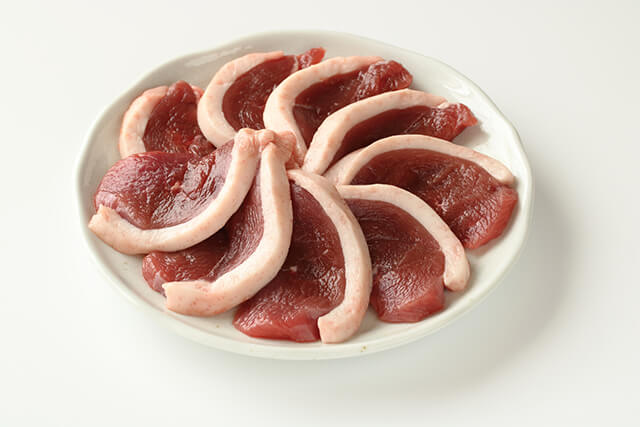
In Japanese, カモ (鴨) refers to "duck," and カモ肉 (鴨肉) refers to "duck meat." The term " カモ" generally denotes small waterfowl from the duck family. Most of the duck meat distributed as カモ肉 is from domesticated ducks, like the Pekin duck, known as アヒル (ahiru) in Japanese, or the hybrid duck known as 合鴨, a cross between domesticated and wild ducks. Wild mallard duck meat is rarely available in the market. Japanese cuisine features various duck dishes like 鴨鍋, duck hot pot, すき焼き, sukiyaki, and 鴨南蛮, duck soba. Due to its distinct gamey flavor, many duck recipes incorporate green onions or water dropwort. In colloquial Japanese, the term 카모 (カモ) also means a person who is easily deceived or taken advantage of. This is because ducks are relatively easy to lure and capture compared to other birds.